
Keeping healthcare strong in rural Iowa
NCC prepares the next generation of healthcare professionals
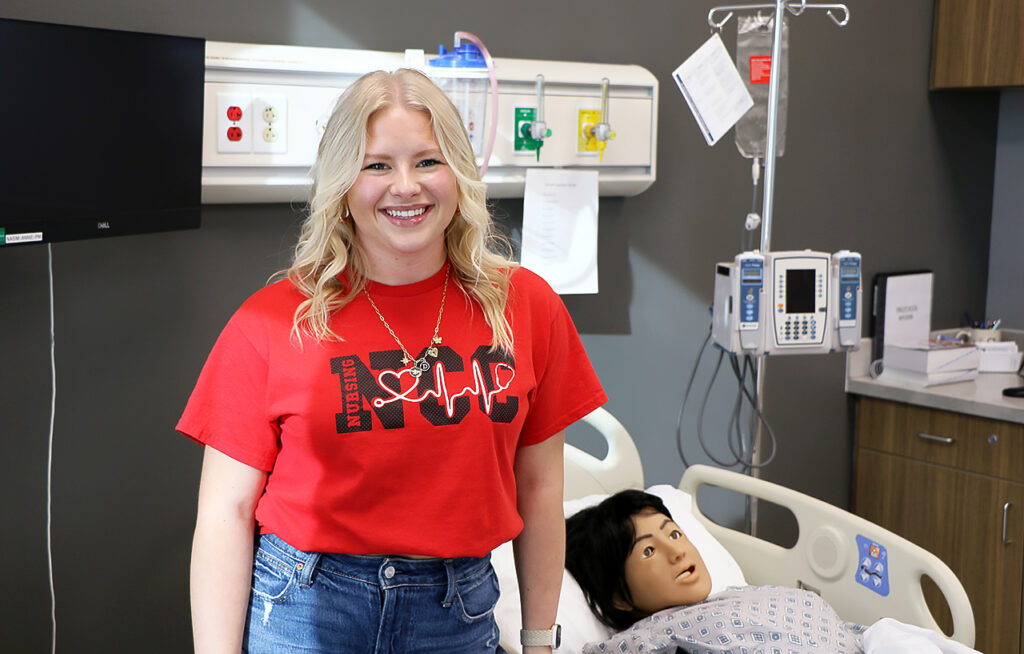
As rural Iowa faces a growing shortage of healthcare workers, Northwest Iowa Community College (NCC) in Sheldon is stepping up to prepare the next generation of professionals who will serve local communities and strengthen rural healthcare systems. With just under 500 students (498 to be exact) currently enrolled in NCC’s health-related programs for Spring 2025, the college plays a crucial role in keeping healthcare strong in Iowa and ensuring access to quality care in rural areas.
Rural healthcare facilities across Iowa continue to face workforce shortages, with high demand for skilled professionals and not enough providers to meet the needs of rural populations. According to the U.S. Bureau of Labor Statistics (BLS), healthcare employment is projected to grow by 13 percent from 2021 to 2031, outpacing the average for all occupations (U.S. Bureau of Labor Statistics). Despite this growth, rural areas remain disproportionately underserved. Although 20 percent of Americans live in rural communities, only about nine percent of physicians practice in these areas, limiting access to healthcare for rural populations (National Rural Health Association). These workforce shortages highlight the urgent need for training initiatives and local partnerships to ensure that rural Iowans have access to quality healthcare providers.
“NCC remains committed to training students who want to live and work in Northwest Iowa,” said Dr. John Hartog, President of NCC. “With the healthcare worker shortage, especially in rural areas, our mission is to ensure that students receive high-quality, hands-on education that prepares them for success—while also strengthening healthcare in our own communities.”
To further expand access to healthcare career education, NCC is extending its rural outreach through Regional Centers. The Sioux Center Regional Center and Career Academy, which opened in 2023, provides career exploration and college-level healthcare courses to high school students in the region. A newly announced Regional Center and Career Academy in Marcus is planned to offer the same curriculum, including transferable healthcare pathway courses—allowing students to continue their education at NCC or transfer to a four-year college or university. Students will have the opportunity to train for state exams to earn a Certified Nursing Assistant (CNA) certificate, as well as Pharmacy Technician or EMT licensure. Additionally, they will receive CPR and First Aid certification upon program completion, equipping them with immediate workforce credentials before graduating from high school.
These Regional Centers are designed to help students get ahead on their college journey, providing early exposure to high-demand careers and hands-on learning experiences. Students can explore career pathways, earn state-recognized workforce credentials, and save money through dual enrollment college courses while still in high school. These credits allow students to transfer into NCC or other colleges and universities or enter the workforce immediately with a recognized certification. Beyond academics, these programs also help students build confidence in their abilities, showing them that college is attainable and that they can succeed if they choose to continue their education. Many students who once doubted their ability to go to college find that these experiences open doors they never thought possible.
Delaney Murphy, an Extended Practical Nursing student from Sanborn is one of the many NCC students who plans to use her education to make a difference in her community. Murphy said, “The nursing program at NCC has great opportunities and resources for students. I love the relationships I have made here. I have always wanted to help people, have a positive impact on my community, and leave lasting impressions on my patients’ lives. I love the hands-on learning at NCC.”
NCC’s Spring 2025 enrollment includes 498 students preparing for healthcare careers. This includes 159 students in Entry-Level Healthcare Training, such as Certified Nursing Assistant (CNA) certification, and 207 students in nursing programs, spanning Practical Nursing, Extended Practical Nursing, Associate Degree Nursing, and Pre-Nursing pathways. Additionally, 107 students are enrolled in Medical & Allied Health Programs, covering fields like Radiologic Technology, Medical Coding, Health Information Technology, Pharmacy Technician, and Medical Laboratory Technology. Another 25 students are pursuing Emergency & Prehospital Care careers, including training for paramedics and EMTs.
Hands-on training is a cornerstone of NCC’s healthcare programs. Students gain experience through state-of-the-art simulation labs, preparing them for real-world patient care scenarios. Additionally, clinical rotations with more than 30 rural and regional healthcare partners provide students with valuable hands-on training in hospitals, clinics, and long-term care facilities. These partnerships help students transition seamlessly from education to employment. Employers also benefit from these collaborations, as they gain access to highly skilled graduates who are prepared to meet the needs of the rural healthcare workforce.
NCC is committed to training students in Iowa’s rural communities and ensuring that educational opportunities are accessible to all. Currently, 88 percent of NCC Practical Nursing graduates remain in Iowa, filling critical roles in rural hospitals and clinics. As healthcare workforce shortages continue to challenge rural communities, NCC plays a vital role in preparing and retaining skilled professionals who provide essential care across the state. The college also boasts a 97 percent licensure pass rate for Practical Nursing students, underscoring the quality and effectiveness of its nursing education.
Graduates from NCC’s healthcare programs earn competitive salaries right out of college, making healthcare careers both rewarding and financially sustainable. For example, graduates from NCC’s Radiologic Technology and Medical Laboratory Technician programs earn an estimated $60,000 annually, providing a strong return on investment for students entering the healthcare field. To further support students, NCC awarded $45,000 in healthcare scholarships in 2023–2024, helping remove financial barriers and making healthcare education more accessible to rural Iowans.
To meet the evolving demands of the healthcare industry, NCC is investing in new technology, program expansions, and strategic partnerships. The college continues to expand rural healthcare training programs, collaborating with local hospitals and emergency response teams to train more paramedics, EMTs, nurses, radiologic technologists, pharmacy technicians, and medical laboratory technicians to serve small communities. Advanced patient simulation technology is enhancing student training, providing immersive, real-world experiences that prepares NCC graduates for the clinical setting. Additionally, continued demand for digital healthcare management has led to the offering of Medical Coding and Health Information Technology programs, allowing students to pursue careers that can be done locally or remotely in rural areas.
NCC is now accepting applications for its healthcare programs, and scholarships are available for eligible students. Prospective students can visit www.nwicc.edu to explore programs and apply. Healthcare providers and rural hospitals interested in partnership opportunities can contact Kristi Landis at klandis@nwicc.edu or Kevin Miller at kmiller@nwicc.edu.